

How Does Saliva Protect Your Teeth & What Happens When It’s Reduced?
Many people ask, how does saliva protect your teeth and why is it so important for maintaining a healthy smile? The answer lies in saliva’s unique ability to defend your mouth every day. Saliva does much more than keep your mouth moist. It helps protect your teeth from cavities, supports healthy gums, washes away food particles, fights harmful bacteria, and even begins the digestion process. Although it’s easy to overlook, saliva is one of your mouth’s most important natural defenses.
When saliva production drops, everyday activities like eating, speaking, and swallowing can become uncomfortable. More importantly, a dry mouth can increase your risk of tooth decay, gum disease, bad breath, and oral infections. Many people don’t realize these problems are connected until symptoms become difficult to ignore.
What Is Saliva?
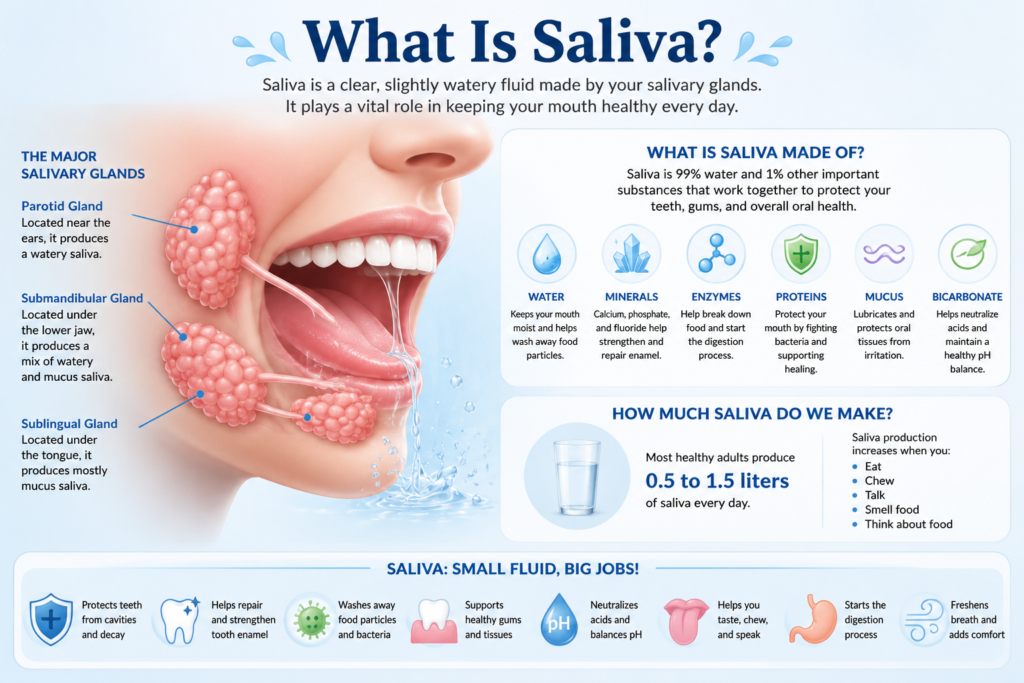
Saliva is a clear fluid produced by several salivary glands located around your mouth and jaw. While it may seem like simple water, it is actually a complex fluid that supports nearly every part of your oral health.
Your mouth contains three major pairs of salivary glands:
- Parotid glands, located just in front of each ear
- Submandibular glands, found beneath the lower jaw
- Sublingual glands, located underneath the tongue
In addition to these larger glands, hundreds of tiny salivary glands are found throughout your lips, cheeks, tongue, and the roof of your mouth. Together, they produce saliva continuously throughout the day.
A healthy adult typically produces between 0.5 and 1.5 liters (about 2 to 6 cups) of saliva every day, although the amount varies depending on hydration, age, medications, diet, and overall health.
Saliva production naturally increases when you:
- Eat or chew food
- Smell or think about food
- Chew sugar free gum
It naturally decreases when you:
- Sleep
- Become dehydrated
- Feel stressed or anxious
- Take certain medications
- Have certain medical conditions
Even when you’re not eating, saliva forms a protective layer that keeps your mouth comfortable and your teeth and gums healthy.
Understanding how does saliva protect your teeth begins with understanding what saliva is and the important substances it contains.
What Is Saliva Made Of?
Although saliva is made up of about 99% water, the remaining 1% contains hundreds of important substances that help protect your mouth and support overall health.
Water
Water keeps your mouth hydrated, rinses away food debris, and makes chewing, swallowing, and speaking much easier.
Minerals
Saliva naturally contains essential minerals, including:
- Calcium
- Phosphate
- Sodium
- Potassium
- Bicarbonate
These minerals help strengthen tooth enamel and support the natural repair process after everyday acid exposure.
Enzymes
Saliva begins digestion before food even reaches your stomach.
Its main digestive enzymes include:
- Salivary amylase, which starts breaking down carbohydrates
- Lingual lipase, which helps begin fat digestion
Protective Proteins
Special proteins in saliva help slow the growth of harmful bacteria and fungi while supporting the health of your oral tissues.
Mucins
Mucins are slippery proteins that lubricate your mouth, making it easier to chew, swallow, and speak without irritation.
Immune Defenses
Saliva contains antibodies, especially Immunoglobulin A (IgA), along with other protective compounds that help your body defend against harmful microbes.
Why Saliva Is Essential for Oral Health
Your mouth faces constant challenges from bacteria, acids, food particles, and daily wear. Saliva works around the clock to keep everything in balance, protecting both your teeth and the soft tissues inside your mouth.
Without enough saliva, your risk of oral health problems rises significantly.
It Protects Tooth Enamel
Saliva neutralizes acids produced by bacteria and acidic foods before they can damage tooth enamel. It also supplies minerals that help repair the earliest stages of enamel damage.
It Cleans Your Mouth Naturally
Every time you swallow, saliva helps wash away leftover food particles, sugars, and bacteria. This continuous cleansing helps reduce plaque buildup between brushing sessions.
It Supports Healthy Gums
Healthy gums rely on moisture to stay comfortable and resilient. Saliva lubricates gum tissue, reduces irritation, and supports the natural healing of small cuts or sores.
It Helps Control Harmful Bacteria
Your mouth contains hundreds of different types of bacteria. Saliva helps maintain a healthy balance by limiting the growth of harmful bacteria that contribute to cavities and gum disease.
It Makes Eating Easier
Saliva softens food and helps form it into a smooth bite that’s easier to swallow. Without enough saliva, dry foods can become difficult or uncomfortable to eat.
It Improves Speech
Moist oral tissues allow your tongue, lips, and cheeks to move smoothly, making it easier to pronounce words clearly.
It Enhances Taste
Flavor molecules dissolve in saliva before reaching your taste buds. Reduced saliva can make foods taste dull or less enjoyable.
It Helps Keep Breath Fresh
Saliva naturally removes food particles and odor causing bacteria. When saliva production decreases, bad breath often becomes more noticeable.
To fully appreciate how does saliva protect your teeth, it’s important to look at the many protective functions saliva performs around the clock.
Healthy Saliva vs Reduced Saliva
| Healthy Saliva | Reduced Saliva |
| Keeps the mouth comfortably moist | Causes dryness and discomfort |
| Washes away food particles | Allows food debris to build up |
| Neutralizes harmful acids | Increases the risk of enamel erosion |
| Supports enamel repair | Makes cavities more likely |
| Helps control bacteria | Encourages bacterial overgrowth |
| Keeps breath fresher | Often contributes to bad breath |
| Makes eating and speaking comfortable | Can make chewing, swallowing, and talking difficult |
| Supports healthy gums | Raises the risk of gum irritation and disease |
The Bottom Line
Saliva is one of the most overlooked parts of oral health, yet it works every minute of every day to protect your teeth, gums, and entire mouth. From strengthening enamel and controlling bacteria to helping you enjoy food and speak comfortably, its role extends far beyond simply keeping your mouth wet.
When saliva production decreases, even small changes can have a noticeable impact on your comfort and dental health. Understanding these protective functions makes it easier to recognize why maintaining healthy saliva flow is so important.
How Saliva Protects Teeth
One of the most common questions dentists hear is, how does saliva protect your teeth from cavities and enamel damage?
Your teeth face constant challenges throughout the day. Every meal, snack, and sugary drink exposes them to acids and bacteria that can weaken enamel. Fortunately, saliva works around the clock to defend your teeth against this daily damage.
Rather than serving a single purpose, saliva protects your teeth in several different ways. It cleans the mouth, neutralizes harmful acids, supplies minerals that strengthen enamel, and helps maintain a healthy balance of bacteria.
Together, these natural defenses significantly lower your risk of tooth decay and other oral health problems.
How Saliva Protects Gums
Healthy gums depend on more than regular brushing and flossing. Saliva plays an essential role in keeping gum tissues moist, nourished, and protected from harmful bacteria.
Each time saliva flows across your gums, it helps remove food debris and bacteria that could otherwise collect along the gumline. This natural cleansing action makes it more difficult for plaque to build up and irritate the gums.
Saliva also contains proteins, antibodies, and growth factors that support the healing of minor cuts or irritation inside the mouth. Whether you’ve accidentally bitten your cheek or recently had a dental cleaning, saliva helps create an environment that supports healthy tissue repair.
When saliva production drops, gums often become dry, sensitive, and more vulnerable to inflammation. Over time, this can increase the risk of gingivitis and more advanced gum disease if good oral hygiene isn’t maintained.
How Saliva Prevents Cavities
One of saliva’s most valuable jobs is helping prevent cavities before they start.
Whenever you eat foods containing carbohydrates or sugar, bacteria naturally present in your mouth feed on these particles and produce acids. These acids begin attacking tooth enamel within minutes.
Normally, saliva helps interrupt this process by:
- Washing away food particles before bacteria can feed on them
- Diluting sugars and acids left behind after eating
- Neutralizing harmful acids with bicarbonate
- Replacing lost minerals in enamel
- Reducing bacterial growth
Without enough saliva, acids remain on the teeth longer, allowing them to weaken enamel and eventually create cavities.
People with chronic dry mouth often experience tooth decay much faster than those with normal saliva production because this natural defense system is weakened.
Saliva’s Role in Fighting Harmful Bacteria
Your mouth is home to hundreds of different microorganisms. Many are beneficial and help maintain a healthy oral environment, while others contribute to plaque, cavities, gum disease, and bad breath when they multiply excessively.
Saliva helps keep this ecosystem balanced.
It contains several natural antimicrobial compounds that slow the growth of harmful bacteria without completely eliminating the beneficial microbes your mouth needs.
These protective substances include:
- Immunoglobulin A (IgA)
- Lysozyme
- Lactoferrin
- Peroxidase enzymes
- Histatins
Together, they help reduce bacterial buildup while supporting a healthier oral microbiome.
Rather than sterilizing your mouth, saliva helps maintain the right balance of microorganisms. This balance is important because an unhealthy shift in oral bacteria has been linked to tooth decay, gum disease, and persistent bad breath.
Saliva and Tooth Remineralization
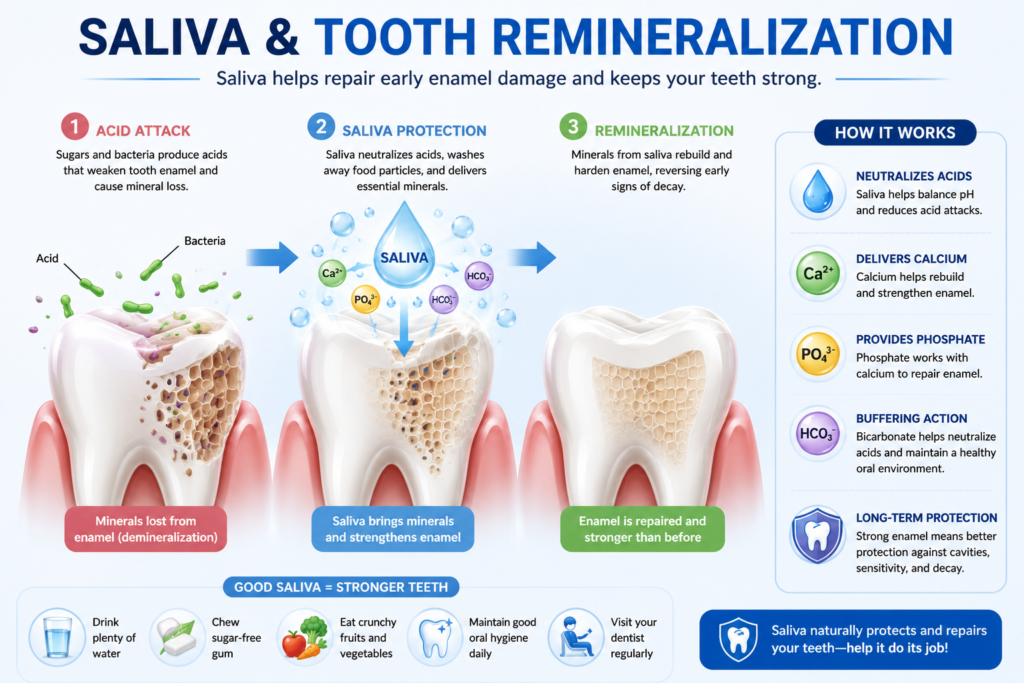
Even healthy teeth lose tiny amounts of minerals every day through a process called demineralization.
Acids from foods, drinks, and oral bacteria slowly dissolve minerals from the enamel surface. If this damage continues unchecked, cavities begin to form.
Fortunately, saliva helps reverse the earliest stages of this process through remineralization.
Saliva delivers essential minerals such as:
- Calcium
- Phosphate
- Fluoride (when available from toothpaste or fluoridated water)
These minerals settle back into weakened enamel, helping repair microscopic areas before permanent damage develops.
You can think of remineralization as your teeth’s natural repair system. As long as saliva production remains healthy and acid attacks aren’t too frequent, enamel can often recover from early mineral loss.
A key reason how does saliva protect your teeth is through remineralization, a natural process that repairs early enamel damage before cavities develop.
Demineralization vs Remineralization
| Demineralization | Remineralization |
| Acids remove minerals from enamel | Saliva restores lost minerals |
| Weakens the tooth surface | Strengthens enamel |
| Increases cavity risk | Helps prevent early tooth decay |
| Triggered by bacteria and acidic foods | Supported by healthy saliva flow |
| Occurs after eating sugary foods | Happens between meals when saliva works naturally |
Saliva and Healthy pH Balance
Another way how does saliva protect your teeth is by neutralizing acids and restoring a healthy pH balance inside the mouth.
Your mouth is healthiest when it maintains a balanced pH level.
After eating, especially sugary or acidic foods, the pH inside your mouth drops. As acidity increases, tooth enamel becomes more vulnerable to damage.
Saliva quickly responds by releasing bicarbonate, one of its most important buffering agents.
Bicarbonate helps neutralize excess acid, gradually returning your mouth to a safer pH level where enamel is less likely to dissolve.
The faster saliva restores this balance, the less time acids have to damage your teeth.
People with reduced saliva often remain in an acidic environment for longer periods, increasing their chances of enamel erosion and cavities.
Saliva’s Role in Digestion
Digestion actually begins in your mouth, not your stomach.
As you chew, saliva mixes with food and starts breaking it down before you swallow.
Saliva helps digestion by:
- Moistening food
- Forming food into an easy to swallow bolus
- Beginning carbohydrate digestion through salivary amylase
- Starting fat digestion with lingual lipase
- Making swallowing smoother and safer
Without enough saliva, chewing and swallowing become more difficult, particularly when eating dry foods like bread, crackers, rice, or meat.
Many people with dry mouth also report needing frequent sips of water just to finish a meal.
Why Saliva Helps Freshen Breath
Fresh breath depends on more than brushing your teeth.
Throughout the day, saliva continuously removes bacteria, dead cells, and food particles that would otherwise collect on your tongue, teeth, and gums.
When saliva production decreases, these materials remain in the mouth longer.
As bacteria break them down, they release unpleasant sulfur compounds that are responsible for much of chronic bad breath.
Healthy saliva helps reduce these odors by:
- Washing away odor causing bacteria
- Removing leftover food debris
- Keeping oral tissues moist
- Supporting a balanced oral microbiome
This is one reason bad breath is one of the earliest and most common symptoms of dry mouth.
Healthy Mouth vs Dry Mouth
| Healthy Mouth | Dry Mouth |
| Comfortable moisture throughout the day | Persistent dryness or stickiness |
| Fresh breath | Frequent bad breath |
| Smooth swallowing | Difficulty swallowing dry foods |
| Strong enamel | Higher risk of cavities |
| Healthy gum tissues | Greater chance of gum irritation |
| Balanced oral bacteria | Harmful bacteria grow more easily |
| Comfortable speech | Talking may become difficult during long conversations |
| Lower risk of oral infections | Increased risk of fungal and bacterial infections |
Key Takeaway
Saliva is one of your mouth’s most effective natural defense systems. It protects your teeth by washing away food particles, neutralizing harmful acids, fighting bacteria, repairing early enamel damage, maintaining a healthy pH balance, supporting digestion, and keeping your breath fresh.
When saliva production slows, these protective functions become less effective. Over time, this can lead to cavities, gum disease, enamel erosion, bad breath, and other oral health problems.
Understanding these benefits makes it easier to recognize why healthy saliva flow is so important and why persistent dry mouth should never be ignored.
Signs You May Have Reduced Saliva
Many people do not realize they have reduced saliva until symptoms become noticeable. A dry mouth may develop gradually, making it easy to overlook at first.
Common signs include:
- A dry, sticky, or cotton-like feeling in the mouth
- Frequent thirst
- Difficulty chewing or swallowing dry foods
- Bad breath that keeps returning
- Cracked lips
- A dry or sore throat
- Hoarseness or difficulty speaking for long periods
- Burning sensations in the mouth or tongue
- Changes in taste
- Increased cavities or gum problems
Early vs More Concerning Signs of Reduced Saliva
| Early Signs | More Concerning Signs |
| Occasional dry mouth | Persistent dryness all day |
| Mild thirst | Difficulty swallowing |
| Temporary bad breath | Frequent cavities |
| Dry lips | Gum irritation or bleeding |
| Morning dryness | Burning mouth sensation |
If these symptoms occur frequently for several weeks, it may be worth discussing them with a dentist or healthcare professional.
What Causes Dry Mouth?
Dry mouth can have many causes. Sometimes it is temporary and harmless, while in other cases it may signal an underlying health issue.
Common causes include dehydration, medications, aging, stress, smoking, alcohol use, mouth breathing, and certain medical conditions that affect the salivary glands.
Once you understand how does saliva protect your teeth, it becomes easier to see why reduced saliva can increase the risk of tooth decay and gum disease.
Medical Conditions That Reduce Saliva
Several health conditions can interfere with normal saliva production.
Examples include:
- Sjögren syndrome
- Diabetes
- Parkinson’s disease
- Stroke
- Alzheimer’s disease
- Autoimmune disorders
- Salivary gland disorders
- Head and neck cancer treatments involving radiation
Important
If dry mouth appears suddenly or is accompanied by other health symptoms, it is important to seek professional evaluation.
Medications That Cause Dry Mouth
One of the most common causes of chronic dry mouth is medication use.
Hundreds of medications can reduce saliva flow, including:
- Antihistamines
- Antidepressants
- Blood pressure medications
- Anxiety medications
- Pain medications
- Muscle relaxants
- Some acne treatments
Medication Related Dry Mouth
| Medication Group | May Reduce Saliva |
| Antihistamines | Yes |
| Antidepressants | Yes |
| Blood pressure medications | Yes |
| Anxiety medications | Yes |
| Pain medications | Yes |
| Muscle relaxants | Yes |
Never stop a prescribed medication on your own. If you suspect a medication is causing dry mouth, speak with your healthcare provider about possible alternatives.
Aging and Saliva
Many people assume aging automatically causes dry mouth. In reality, healthy aging alone usually causes only a small reduction in saliva production.
However, older adults are more likely to:
- Take multiple medications
- Have chronic health conditions
- Experience dehydration
- Develop conditions that affect the salivary glands
These factors often contribute more to dry mouth than age itself.
Stress and Saliva Production
Stress and anxiety can temporarily reduce saliva flow.
Many people notice their mouth feels dry before:
- Public speaking
- Exams
- Interviews
- Important meetings
- Stressful life events
For most people, saliva production returns to normal once stress decreases.
Dehydration
When your body lacks enough fluids, it may conserve water by producing less saliva.
Dehydration can result from:
- Not drinking enough water
- Hot weather
- Exercise
- Fever
- Vomiting or diarrhea
- Excessive caffeine intake
Good news
This is often one of the easiest causes of dry mouth to improve by restoring healthy hydration habits.
Smoking
Tobacco can irritate the mouth and contribute to dryness.
Smoking is also associated with:
- Bad breath
- Gum disease
- Slower healing
- Increased plaque buildup
- Higher risk of oral cancer
Quitting smoking often improves overall oral comfort and health.
Alcohol
Alcohol can dry out the tissues of the mouth and throat.
Frequent or heavy alcohol use may contribute to:
- Dry mouth
- Bad breath
- Gum irritation
- Increased cavity risk
Mouth Breathing
Breathing through the mouth instead of the nose can cause noticeable dryness, especially during sleep.
Common causes include:
- Nasal congestion
- Allergies
- Deviated septum
- Sleep-related breathing issues
People who wake up with a very dry mouth often discover they are breathing through their mouth during the night.
Temporary vs Chronic Dry Mouth
| Temporary Dry Mouth | Chronic Dry Mouth |
| Usually lasts hours or days | Lasts weeks, months, or longer |
| Often caused by dehydration or stress | Often linked to medications or health conditions |
| Usually improves quickly | May require ongoing management |
| Less likely to damage teeth | Can significantly increase cavity risk |
| May not need treatment | Should be evaluated if persistent |
Can Low Saliva Damage Your Teeth?
Yes. Persistent low saliva can significantly increase the risk of dental problems.
Without enough saliva:
- Acids stay on teeth longer
- Enamel loses minerals more easily
- Bacteria multiply faster
- Plaque accumulates more quickly
- Gums become more vulnerable to inflammation
- Bad breath often worsens
People with severe dry mouth sometimes develop cavities around the edges of existing fillings, near the gumline, and on tooth surfaces that previously remained healthy.
What Happens If Dry Mouth Is Left Untreated?
Ignoring chronic dry mouth can lead to more than discomfort.
Potential complications include:
- Frequent cavities
- Gum disease
- Oral fungal infections (such as thrush)
- Difficulty eating and swallowing
- Speech problems
- Burning mouth symptoms
- Reduced taste sensation
- Increased dental treatment needs
Key Takeaway
Reduced saliva is more than a minor annoyance. It can affect your comfort, your ability to eat and speak, and the long term health of your teeth and gums. Understanding the common causes of dry mouth makes it easier to identify potential triggers and take steps to protect your smile before more serious problems develop.
In the next section, we’ll explore the best ways to increase saliva naturally, including foods, daily habits, and practical strategies that can help keep your mouth healthier and more comfortable.
Best Ways to Increase Saliva Naturally
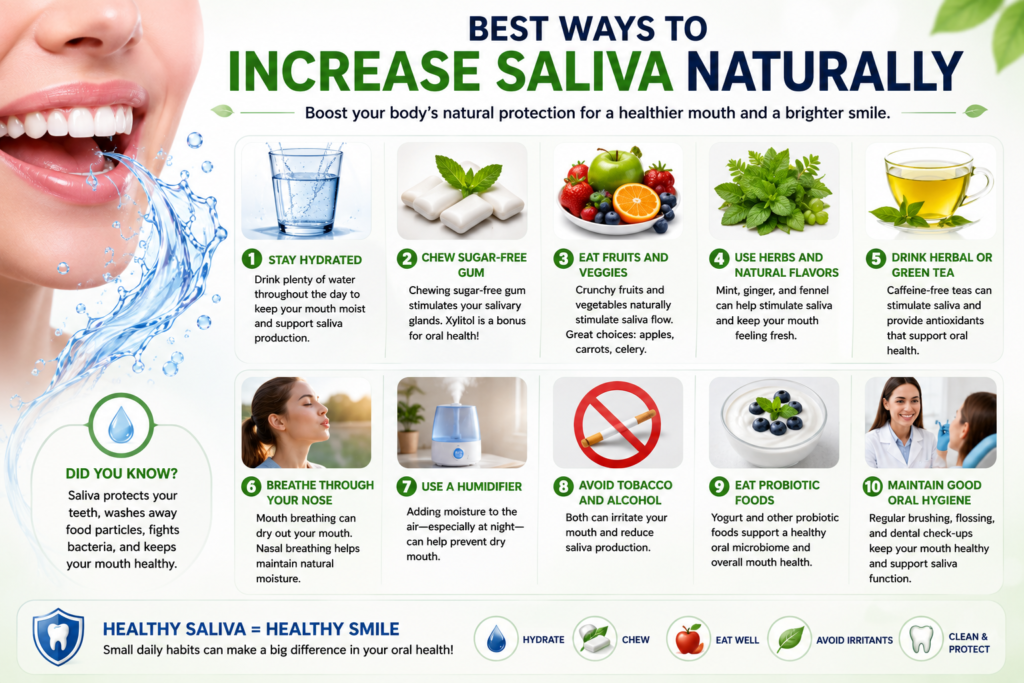
If you’ve been dealing with a dry mouth, the good news is that there are several simple ways to encourage healthy saliva production. While the right solution depends on the underlying cause, many people find relief by making small changes to their daily routine.
These natural strategies can help keep your mouth more comfortable while reducing the risk of cavities, gum disease, and bad breath.
Supporting healthy saliva production is one of the easiest ways to preserve the natural processes that explain how does saliva protect your teeth every day.
Stay Well Hydrated
Drinking enough water is one of the easiest ways to support normal saliva production. When your body is dehydrated, your salivary glands may produce less saliva to conserve fluids.
To stay hydrated:
- Sip water regularly throughout the day instead of waiting until you feel thirsty.
- Carry a reusable water bottle when you’re away from home.
- Drink extra fluids during hot weather, exercise, or illness.
- Limit beverages that may contribute to dehydration, such as excessive caffeine or alcohol.
Although water doesn’t replace saliva, it helps keep your mouth moist and supports your body’s natural saliva production.
Chew Sugar Free Gum
Chewing stimulates the salivary glands, making it one of the fastest ways to increase saliva flow.
Sugar free gum, especially varieties containing xylitol, can be particularly beneficial because it:
- Encourages saliva production
- Helps rinse away food particles
- Supports a healthier oral environment
- May reduce the growth of cavity causing bacteria
For many people, chewing sugar free gum for 10 to 20 minutes after meals provides noticeable relief from temporary dry mouth.
Choose Saliva Friendly Foods
Certain foods naturally stimulate saliva because they require more chewing or have flavors that activate the salivary glands.
Some good choices include:
- Apples
- Pears
- Carrots
- Cucumbers
- Celery
- Bell peppers
- Citrus fruits, if they don’t cause irritation
- Sugar free yogurt
Crunchy fruits and vegetables also help clean the teeth while encouraging healthy saliva flow.
Limit Sugary Snacks
Frequent sugary snacks feed harmful bacteria, increasing acid production inside the mouth.
If you have reduced saliva, these acids remain on your teeth longer, making cavities more likely.
Instead of constantly snacking on sweets, choose foods that are kinder to your teeth and allow saliva time to restore a healthy balance between meals.
Reduce Drying Habits
Some everyday habits can make dry mouth worse.
Try to reduce or avoid:
- Smoking or vaping
- Excessive alcohol consumption
- Drinking large amounts of caffeinated beverages
- Frequent sugary drinks
- Very salty foods
Making even a few healthier choices can help improve your overall oral comfort.
Use a Humidifier at Night
If you often wake up with a dry mouth, especially during colder months, adding moisture to your bedroom air may help.
A cool mist humidifier can reduce overnight dryness by increasing humidity while you sleep.
Although it doesn’t increase saliva production directly, it often makes dry mouth symptoms less noticeable.
Practice Good Oral Hygiene
Keeping your mouth clean becomes even more important when saliva production is reduced.
Aim to:
- Brush twice daily with fluoride toothpaste.
- Floss every day.
- Clean your tongue regularly.
- Visit your dentist for routine checkups and professional cleanings.
A healthy mouth is better able to cope with occasional reductions in saliva.
Foods That Stimulate Saliva
Your diet can have a surprising effect on saliva production. Some foods naturally encourage the salivary glands to work harder, while others may leave your mouth feeling drier.
Best Foods for Healthy Saliva Flow
| Food | How It Helps |
| Apples | Require chewing and stimulate saliva |
| Pears | Naturally increase saliva flow |
| Carrots | Crunchy texture encourages chewing |
| Celery | Promotes saliva while helping clean teeth |
| Cucumbers | High water content supports hydration |
| Bell peppers | Crisp texture stimulates the glands |
| Sugar free yogurt | Moist texture and beneficial nutrients |
| Watermelon | Provides hydration while refreshing the mouth |
Foods to Enjoy in Moderation
Some foods may contribute to dryness or increase the risk of cavities when saliva production is already low.
Examples include:
- Sticky candies
- Sugary snacks
- Highly processed foods
- Salty chips
- Sweetened soft drinks
- Energy drinks
These foods don’t directly reduce saliva production, but they can make dry mouth symptoms more noticeable and increase the workload on your teeth.
Habits That Improve Saliva Production
Healthy saliva flow isn’t only influenced by what you eat. Your everyday habits also play an important role.
Consider incorporating these simple practices into your routine:
Breathe Through Your Nose
Whenever possible, breathe through your nose instead of your mouth. This helps reduce moisture loss and keeps oral tissues more comfortable.
If nasal congestion makes this difficult, talk with your healthcare provider about possible treatments.
Manage Stress
Stress can temporarily reduce saliva production in many people.
Helpful stress management techniques include:
- Walking
- Deep breathing exercises
- Meditation
- Yoga
- Regular physical activity
- Getting enough sleep
Reducing stress may help improve saliva flow while benefiting your overall health.
Avoid Tobacco Products
Smoking and other tobacco products can irritate oral tissues and worsen dry mouth.
Quitting tobacco not only supports healthier saliva production but also lowers your risk of gum disease, tooth loss, and oral cancer.
Schedule Regular Dental Visits
Routine dental checkups allow your dentist to identify early signs of dry mouth before more serious complications develop.
Professional care is especially important if you frequently experience:
- Mouth dryness
- Increased cavities
- Gum inflammation
- Persistent bad breath
Early intervention often prevents more extensive dental treatment later.
Interesting Facts About Saliva
Saliva is far more fascinating than many people realize. Here are a few surprising facts.
Your Body Produces a Lot of Saliva
Most healthy adults produce between half a liter and one and a half liters of saliva every day. Over a lifetime, that’s enough saliva to fill hundreds of bathtubs.
Saliva Changes Throughout the Day
Saliva isn’t always the same.
Its amount, thickness, and composition change depending on:
- Time of day
- Hydration
- Meals
- Stress levels
- Sleep
- Overall health
Your Mouth Contains Hundreds of Bacterial Species
Not all bacteria are harmful.
A healthy mouth contains a diverse community of microorganisms that work together to maintain balance. Saliva helps support this healthy ecosystem by controlling the growth of harmful bacteria.
Saliva Helps You Enjoy Food
Without saliva, many foods would taste much less flavorful because taste molecules need to dissolve before your taste buds can detect them.
Saliva Protects More Than Teeth
In addition to protecting enamel, saliva also helps:
- Lubricate oral tissues
- Support wound healing
- Make swallowing easier
- Improve speech
- Begin digestion
- Protect the throat and soft tissues
Common Myths About Saliva
There are several misconceptions about saliva and dry mouth. Understanding the facts can help you take better care of your oral health.
| Myth | Fact |
| Dry mouth is just a normal part of aging. | Aging alone usually isn’t the main cause. Medications and health conditions are often responsible. |
| Drinking water cures dry mouth completely. | Water helps relieve symptoms but may not solve the underlying cause. |
| Bad breath only comes from poor brushing. | Reduced saliva is also a common contributor to persistent bad breath. |
| Dry mouth isn’t harmful. | Chronic dry mouth increases the risk of cavities, gum disease, and oral infections. |
| If your mouth feels fine during the day, you don’t have dry mouth. | Some people mainly experience dryness at night or upon waking. |
Morning Saliva vs Daytime Saliva
Have you ever wondered why your mouth feels much drier when you wake up?
The answer lies in your body’s natural daily rhythm.
During the day, eating, drinking, talking, and chewing constantly stimulate saliva production. This steady flow helps keep your mouth clean, moist, and comfortable.
While you sleep, however, saliva production naturally slows. This is completely normal and allows your body to rest. As a result, bacteria have more time to multiply overnight, which is why many people notice:
- Morning breath
- A dry mouth upon waking
- A sticky feeling on the tongue
- A stronger taste in the mouth
These symptoms are usually temporary and improve after drinking water, eating breakfast, and brushing your teeth.
However, if your mouth feels extremely dry every morning or remains dry throughout the day, it may indicate an underlying issue such as mouth breathing, medication side effects, or reduced saliva production that deserves further evaluation.
Key Takeaway
Supporting healthy saliva production doesn’t require complicated treatments for most people. Staying hydrated, eating saliva friendly foods, maintaining good oral hygiene, and avoiding habits that contribute to dryness can make a meaningful difference in both comfort and long term oral health.
In the next section, we’ll explore how saliva works while you sleep, its connection to taste, gum healing, the oral microbiome, bad breath, dental recovery, and even your overall health.
Saliva During Sleep
Although your mouth continues producing saliva while you sleep, the amount is much lower than during the day. This natural decrease helps explain why many people wake up with a dry mouth or morning breath.
During sleep, your body isn’t eating, chewing, or speaking, so your salivary glands receive fewer signals to produce saliva. As a result, bacteria have more time to multiply, and food debris isn’t washed away as efficiently.
For most people, saliva flow increases again soon after waking. However, if you frequently wake up with severe dryness, it could be related to:
- Mouth breathing
- Snoring
- Sleep apnea
- Certain medications
- Dehydration
- An underlying medical condition
If morning dryness is persistent or affects your quality of life, it’s worth discussing with your dentist or healthcare provider.
Saliva and Taste Perception
Have you ever noticed that food tastes less flavorful when your mouth is dry?
That’s because saliva is essential for your sense of taste.
Before your taste buds can detect sweet, salty, sour, bitter, or savory flavors, food molecules must first dissolve in saliva. Without enough moisture, those flavor molecules cannot easily reach the taste receptors on your tongue.
Reduced saliva may lead to:
- Diminished taste
- Altered taste sensations
- Difficulty enjoying certain foods
- Reduced appetite
Many people with chronic dry mouth find that improving saliva flow also improves their ability to enjoy meals again.
Saliva and Gum Healing
Your gums experience minor injuries more often than you may realize. Brushing, flossing, eating crunchy foods, or accidentally biting your cheek can all cause tiny areas of irritation.
Saliva helps support the healing process by:
- Keeping tissues moist
- Delivering protective proteins
- Helping control harmful bacteria
- Reducing irritation during healing
Healthy saliva creates an environment where small cuts and sores can recover more comfortably.
When saliva production is reduced, healing may feel slower, and the gums can become more vulnerable to irritation and inflammation.
Saliva and the Oral Microbiome
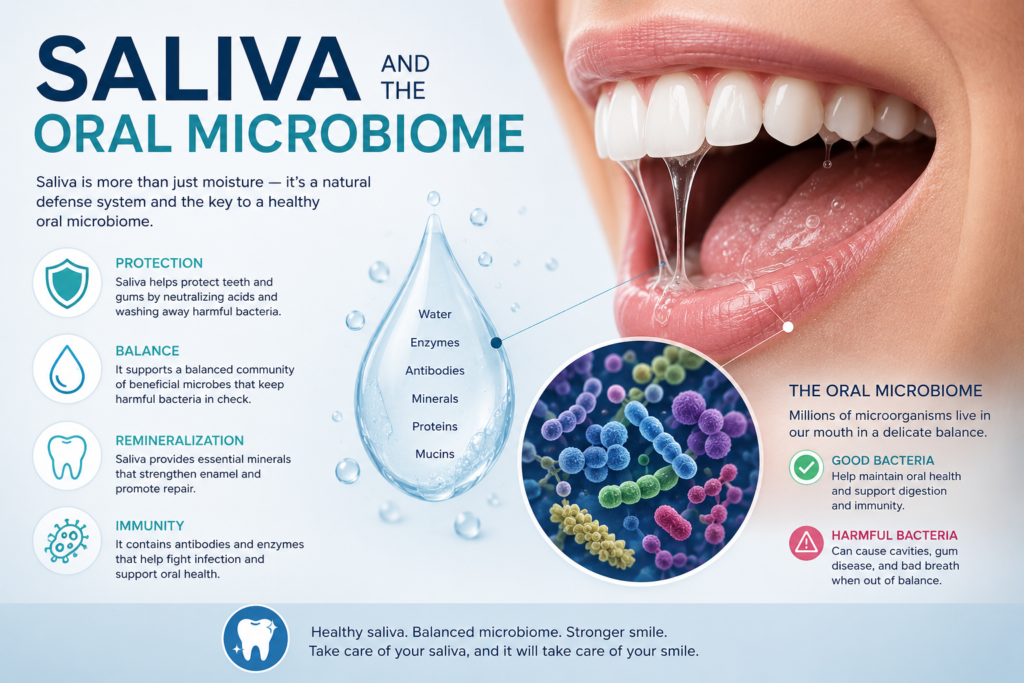
Your mouth is home to a complex community of bacteria, fungi, and other microorganisms known as the oral microbiome.
While the word “bacteria” often sounds negative, many of these microbes are actually beneficial. They help maintain balance and contribute to a healthy mouth.
Saliva plays an important role in supporting this ecosystem by:
- Washing away excess bacteria
- Delivering protective proteins
- Maintaining a healthy pH
- Preventing harmful microbes from becoming dominant
When saliva production decreases, this balance can be disrupted. Harmful bacteria may grow more quickly, increasing the risk of:
- Tooth decay
- Gum disease
- Bad breath
- Oral infections
Maintaining healthy saliva flow is one of the simplest ways to support a balanced oral microbiome.
Saliva and Bad Breath
Bad breath, also known as halitosis, is one of the most common signs of reduced saliva.
Normally, saliva continuously cleans the mouth by removing food particles, dead cells, and bacteria that produce unpleasant odors.
When saliva is limited, these materials remain on the teeth, gums, and tongue for longer periods. As bacteria break them down, they release sulfur compounds that cause unpleasant breath.
Dry mouth related bad breath often becomes worse:
- After sleeping
- During long conversations
- After drinking alcohol
- During dehydration
- When taking certain medications
Improving saliva production often helps reduce persistent bad breath alongside regular brushing, flossing, and tongue cleaning.
Saliva After Dental Treatments
Saliva also plays an important role after many dental procedures.
Whether you’ve had a filling, deep cleaning, crown, implant, or tooth extraction, saliva helps create a healthier environment for recovery.
Its benefits include:
- Keeping tissues lubricated
- Helping cleanse the treatment area
- Supporting the natural healing process
- Reducing irritation from everyday activities like eating and speaking
Following your dentist’s aftercare instructions and staying well hydrated can help support normal healing.
If dry mouth develops after a dental procedure, let your dentist know, as additional care may be recommended.
Saliva and Overall Body Health
Although saliva is best known for protecting your mouth, its importance extends well beyond your teeth and gums.
Healthy saliva contributes to several aspects of overall well being.
It Supports Digestion
By moistening food and beginning the breakdown of carbohydrates and fats, saliva makes swallowing easier and prepares food for digestion.
It Helps Protect Against Infection
Saliva contains natural immune components that help your body defend against harmful microorganisms entering through the mouth.
It Makes Communication Easier
Adequate saliva allows your tongue and lips to move smoothly, helping you speak clearly and comfortably throughout the day.
It Supports Nutrition
When dry mouth makes eating uncomfortable, some people begin avoiding nutritious foods such as fruits, vegetables, and lean proteins.
Maintaining healthy saliva flow helps make meals more enjoyable and supports a balanced diet.
Healthy Oral Care Supports Healthy Saliva
While your body naturally produces saliva, your daily oral care routine also plays an important role in protecting your teeth and gums.
Brushing twice a day with fluoride toothpaste, flossing daily, staying hydrated, and scheduling regular dental checkups all work alongside saliva’s natural protective functions.
If you experience ongoing dry mouth, choosing high quality oral care products designed to support moisture and maintain a healthy oral environment can make daily care more comfortable.
At Denta Med AU, we offer carefully selected oral care solutions for people looking to support healthier teeth, gums, and overall oral comfort. If you’re exploring ways to improve your daily routine, you can browse our Shop for products that complement good oral hygiene habits, and visit our Blog for more evidence based tips on managing common oral health concerns.
Remember, oral care products work best when combined with healthy habits and regular professional dental care.
Saliva’s Many Benefits at a Glance
| How Saliva Helps | Benefit for Your Health |
| Protects tooth enamel | Lowers the risk of cavities |
| Lubricates oral tissues | Makes eating and speaking easier |
| Supports gum healing | Promotes healthier soft tissues |
| Balances oral bacteria | Helps reduce plaque buildup |
| Freshens breath | Limits odor causing bacteria |
| Begins digestion | Helps break down food |
| Enhances taste | Improves flavor perception |
| Supports the immune system | Helps defend against harmful microbes |
| Maintains oral comfort | Reduces irritation and dryness |
Key Takeaway
Saliva is far more than a simple fluid. It supports healthy teeth, protects your gums, helps wounds heal, balances the oral microbiome, freshens your breath, improves taste, aids digestion, and contributes to your overall health every single day.
When saliva production decreases, these protective benefits become less effective, increasing the risk of discomfort and dental problems. Taking steps to support healthy saliva flow is one of the easiest ways to maintain a healthier mouth.
Next, we’ll cover when you should visit a dentist for dry mouth, answer the most frequently asked questions about saliva and oral health, and wrap up with the key takeaways from this guide.
When You Should Visit a Dentist
Occasional dry mouth after exercise, a stressful day, or a restless night’s sleep is usually nothing to worry about. However, if the problem becomes frequent or persistent, it’s important to have it evaluated.
A dentist can determine whether your symptoms are related to oral health, medications, lifestyle habits, or an underlying medical condition. Early treatment can help prevent complications such as tooth decay, gum disease, and oral infections.
Consider scheduling a dental appointment if you:
- Have a dry mouth that lasts for more than a few weeks
- Frequently wake up with a very dry mouth
- Develop cavities more often than usual
- Experience ongoing bad breath despite good oral hygiene
- Notice difficulty chewing, swallowing, or speaking
- Have sore, cracked, or bleeding gums
- Experience a burning sensation in your mouth or tongue
- Wear dentures that have become uncomfortable due to dryness
Your dentist may recommend lifestyle changes, fluoride treatments, saliva substitutes, or work with your physician if medications or health conditions appear to be contributing to the problem.
Quick Answer: How Does Saliva Protect Your Teeth?
Saliva is your mouth’s natural defense system. It continuously protects your teeth and gums by:
- Washing away food particles and harmful bacteria
- Neutralizing acids that can weaken tooth enamel
- Replacing lost minerals through remineralization
- Supporting healthy gums and soft tissues
- Helping control plaque buildup
- Keeping your mouth comfortably moist
- Freshening your breath
- Beginning the digestion process
When saliva production decreases, your risk of cavities, gum disease, enamel erosion, bad breath, and oral infections increases. That’s why maintaining healthy saliva flow is an important part of protecting your smile.
Quick Tip: If you frequently experience a dry mouth that lasts for several weeks, speak with your dentist. Early treatment can help prevent long term oral health problems.
Maintain a Healthy Smile with the Right Oral Care Routine
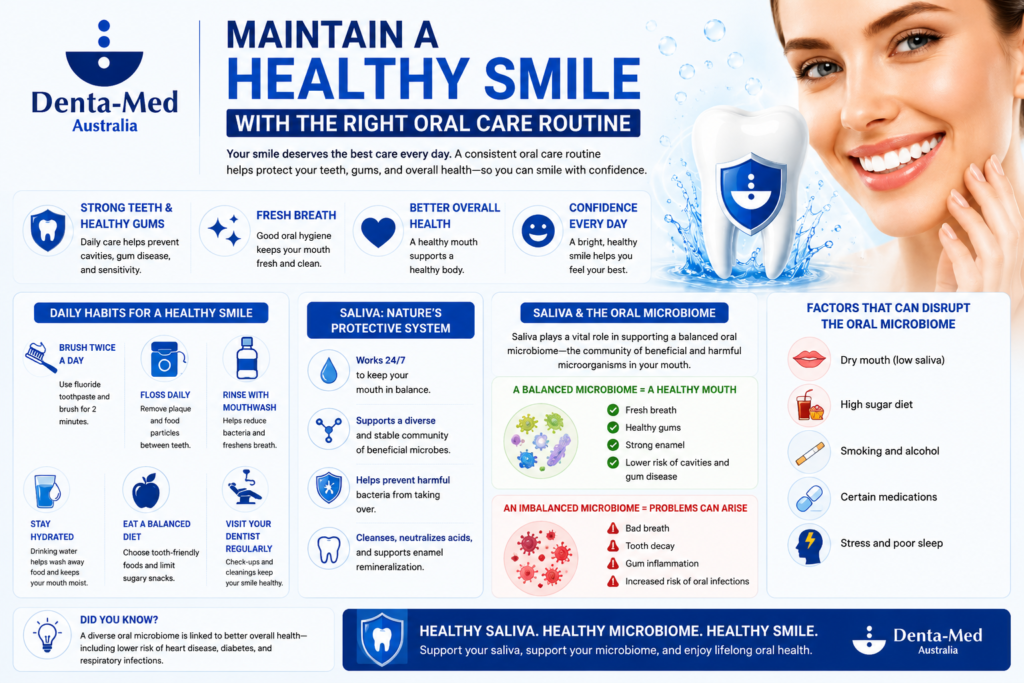
Healthy saliva does a remarkable job of protecting your mouth, but it works best alongside a consistent oral hygiene routine.
Brushing twice a day with fluoride toothpaste, flossing daily, eating a balanced diet, drinking enough water, and attending regular dental checkups all help support saliva’s natural protective functions.
For people who experience occasional dry mouth or simply want to maintain excellent oral health, using high quality oral care products can make daily care easier and more effective. Choosing products designed to support moisture, protect enamel, and promote healthy gums may help reduce discomfort while complementing your body’s natural defenses.
At Denta Med AU, our goal is to help people make informed decisions about their oral health. Along with sharing evidence based educational content through our Blog, we offer carefully selected oral care solutions in our Shop that are designed to support healthier teeth, gums, and overall oral comfort.
Remember that no product can replace healthy daily habits or professional dental care. The best results come from combining a good oral hygiene routine with regular dental visits and addressing any underlying causes of dry mouth.
Key Takeaways
Before you go, here are the most important points to remember:
✔ Saliva protects your teeth by washing away food particles, neutralizing acids, and repairing early enamel damage.
✔ Healthy saliva helps reduce the risk of cavities, gum disease, bad breath, and oral infections.
✔ Dry mouth can result from dehydration, medications, stress, smoking, mouth breathing, aging, or certain medical conditions.
✔ Drinking enough water, chewing sugar free gum, eating crunchy fruits and vegetables, and maintaining good oral hygiene can help support healthy saliva production.
✔ Persistent dry mouth should never be ignored because it can lead to serious dental problems over time.
✔ Regular dental checkups allow problems related to reduced saliva to be identified and treated early.
By understanding how saliva works and taking simple steps to protect it, you can help keep your teeth stronger, your gums healthier, and your smile feeling its best for years to come.
Frequently Asked Questions
1. What is the main purpose of saliva?
Saliva protects your teeth and gums by washing away food particles, neutralizing harmful acids, controlling bacteria, supporting enamel repair, and keeping your mouth comfortable. It also helps with digestion, swallowing, speaking, and taste.
2. Can drinking more water increase saliva production?
Drinking enough water helps your body stay hydrated and can relieve dry mouth symptoms. However, if reduced saliva is caused by medications or a medical condition, hydration alone may not fully restore normal saliva production
3. Does dry mouth always mean I’m dehydrated?
No. While dehydration is a common cause, dry mouth can also result from medications, stress, mouth breathing, smoking, aging, autoimmune diseases, diabetes, and other health conditions.
4. Can low saliva cause cavities?
Yes. Saliva is one of your teeth’s natural defenses against decay. Without enough saliva, acids and bacteria remain on the teeth longer, increasing the risk of cavities and enamel erosion.
5. Is dry mouth more common as you get older?
Dry mouth becomes more common with age, but it is usually related to medications or chronic health conditions rather than the aging process itself.
6. What foods help stimulate saliva?
Crunchy fruits and vegetables such as apples, pears, carrots, celery, and cucumbers encourage chewing, which naturally stimulates saliva production. Sugar free gum containing xylitol can also help increase saliva flow.
7. Why is my mouth so dry when I wake up?
Saliva production naturally decreases during sleep. Mouth breathing, snoring, dehydration, or certain medications can make morning dryness more noticeable.
8. Can stress cause dry mouth?
Yes. Stress and anxiety can temporarily reduce saliva production. Many people notice a dry mouth before public speaking, exams, or other stressful situations.
9. Does saliva help prevent bad breath?
Absolutely. Saliva continuously removes food particles and odor causing bacteria. When saliva production drops, bacteria build up more easily, leading to persistent bad breath.
10. How does saliva protect your teeth?
Saliva protects your teeth by washing away food particles, neutralizing acids, controlling harmful bacteria, repairing enamel with essential minerals, and keeping your mouth comfortably moist.
11. Can dry mouth affect my sense of taste?
Yes. Saliva helps dissolve food particles so they can reach your taste buds. Reduced saliva may make foods taste less flavorful or change how certain foods taste.
12. Can dry mouth damage my gums?
Yes. Without enough saliva, your gums become more vulnerable to irritation, inflammation, and bacterial buildup, increasing the risk of gum disease over time.
13. Are saliva substitutes the same as natural saliva?
No. Saliva substitutes help relieve dryness by lubricating the mouth, but they do not fully replace the protective minerals, enzymes, antibodies, and other beneficial components found in natural saliva.
14. When should I seek professional help for dry mouth?
If your dry mouth persists for several weeks, interferes with eating or speaking, causes frequent cavities, or is accompanied by pain or oral sores, schedule an appointment with your dentist or healthcare provider.
Conclusion
Saliva may not receive much attention, but it plays an essential role in protecting your oral health every single day. From strengthening tooth enamel and supporting healthy gums to fighting harmful bacteria, balancing your mouth’s pH, aiding digestion, and keeping your breath fresh, saliva is one of your body’s most effective natural defense systems.
Saliva plays a vital role in protecting your teeth and gums by neutralizing harmful acids, washing away food particles, and supporting the natural repair of tooth enamel. If you’d like to learn more about the science behind saliva, xerostomia (dry mouth), or tooth enamel, trusted resources such as Wikipedia provide helpful background information, while the American Dental Association (ADA) offers evidence based guidance on maintaining good oral health and preventing dental disease.
When saliva production decreases, your mouth becomes more vulnerable to cavities, gum disease, bad breath, and discomfort. The good news is that many cases of dry mouth can be improved through healthy daily habits, proper hydration, regular dental care, and addressing any underlying causes.
By understanding how saliva works and recognizing the early signs of reduced saliva flow, you can take proactive steps to protect your smile for years to come.
If you’re looking to support your daily oral care routine, explore the carefully selected solutions available in the Denta Med AU Shop. For more expert guidance on dry mouth, gum health, bad breath, and preventive dental care, be sure to visit our Blog, where you’ll find practical, evidence based articles designed to help you make informed decisions about your oral health.
A healthy smile starts with the small habits you practice every day, and protecting your natural saliva is one of the simplest and most effective steps you can take.
By understanding how does saliva protect your teeth, you can make better daily choices that support stronger enamel, healthier gums, and long term oral health.