

Can Dry Mouth Cause Bad Breath? Causes, Symptoms & How to Get Relief
If you’ve ever wondered, “Can dry mouth cause bad breath?”, the short answer is yes, absolutely.
In fact, dry mouth is one of the most common hidden causes of persistent bad breath. Many people brush regularly, chew gum, and use strong mouthwashes, yet still struggle with unpleasant breath every day. The real problem often isn’t poor hygiene. It’s a lack of saliva.
Saliva does much more than keep your mouth comfortable. It helps wash away food particles, controls bacteria, protects your teeth, and naturally keeps your breath fresh. When your mouth becomes dry, those protective benefits disappear, allowing odor-causing bacteria to thrive.
The good news is that once you understand the connection between dry mouth and bad breath, you can take simple steps to improve both.
At Denta-Med, helping people manage dry mouth comfortably is our primary focus. Through proper hydration, gentle oral care, and moisture-supporting products, many people find lasting relief instead of temporary fixes.
Can Dry Mouth Cause Bad Breath?
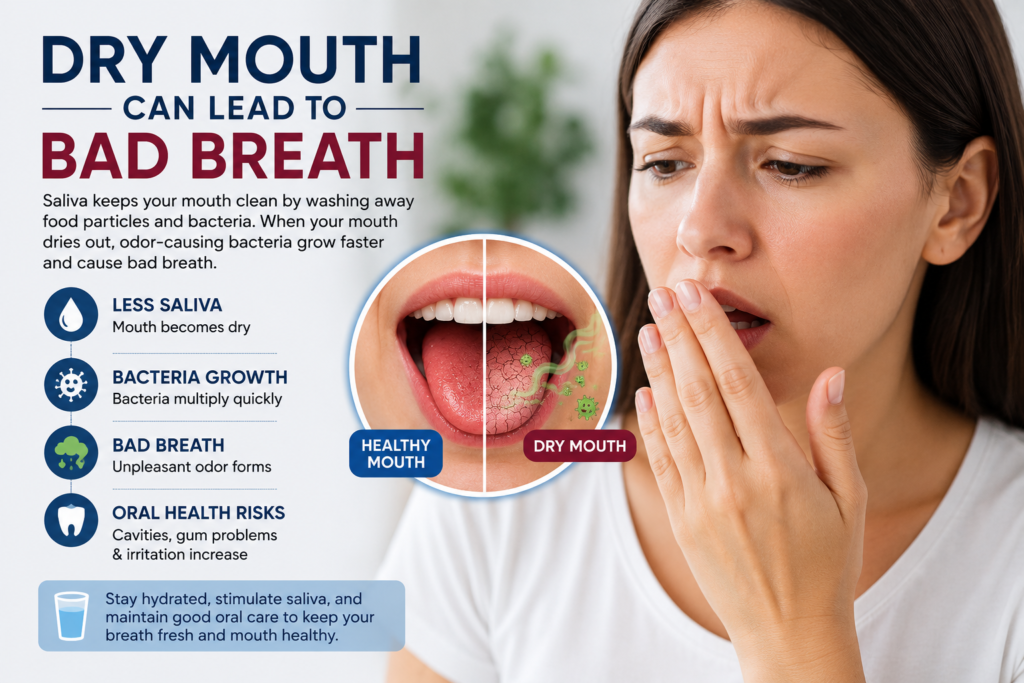
Dry mouth, also known as xerostomia, it can directly cause bad breath because saliva is your mouth’s natural cleaning system.
When saliva levels drop:
- Food particles stay in the mouth longer.
- Bacteria multiply more quickly.
- Sulfur-producing germs become active.
- The tongue becomes coated.
- Your mouth develops an unpleasant odor.
That is why many people wake up with strong morning breath after sleeping with their mouths open or snoring throughout the night.
The solution isn’t simply covering up bad breath with mint flavors. The real solution is restoring moisture and supporting your mouth’s natural defenses.
Why Saliva Is So Important For Fresh Breath
Most people never think about saliva until they stop producing enough of it.
Yet saliva works around the clock to keep your mouth healthy.
It helps by:
Washing Away Food Debris
Tiny food particles remain between teeth, along the gums, and on the tongue after eating. Saliva continuously rinses these particles away before bacteria can feed on them.
Controlling Harmful Bacteria
Your mouth naturally contains hundreds of different bacteria. Many are harmless, but some produce unpleasant odors.
Saliva helps keep these bacteria balanced and prevents overgrowth.
Neutralizing Acids
Acid-producing bacteria can damage tooth enamel and create an unhealthy environment inside the mouth. Saliva helps neutralize those acids and protects your teeth.
Keeping Oral Tissues Comfortable
Dry tissues become irritated, inflamed, and more vulnerable to infection. Adequate moisture helps your gums, tongue, cheeks, and throat remain healthy.
Without enough saliva, all of these protective functions begin to decline.
How Dry Mouth Causes Bad Breath
The connection is actually quite simple.
Certain bacteria prefer environments with very little oxygen. These bacteria are called anaerobic bacteria.
When saliva production decreases, the mouth becomes an ideal place for them to grow.
As they feed on leftover food particles and dead cells, they produce compounds that contain sulfur. These sulfur compounds are responsible for the unpleasant smell associated with chronic bad breath.
The odor is often described as:
- Sour
- Metallic
- Rotten egg-like
- Musty
- Persistent even after brushing
According to information about xerostomia on Wikipedia, reduced saliva production affects not only comfort but also overall oral health and increases the risk of infections and tooth decay.
Signs That Your Bad Breath May Be Caused By Dry Mouth
Many people do not immediately realize that dry mouth is causing their bad breath.
Here are some common warning signs:
Your Mouth Feels Dry Or Sticky
A sticky sensation, especially upon waking up, is one of the most obvious indicators.
You Need Water Constantly
If you always keep a bottle nearby or wake up multiple times during the night for a drink, dry mouth may be the reason.
Your Tongue Looks White Or Coated
A thick coating on the tongue often indicates bacterial buildup caused by insufficient saliva.
Your Lips Frequently Crack
Dry lips frequently occur alongside reduced moisture inside the mouth.
You Experience Strong Morning Breath
Morning breath is normal to some extent, but severe or persistent odor can indicate nighttime dry mouth.
Food Tastes Different
Saliva plays an important role in taste. When saliva decreases, flavors may seem weaker or unusual.
You Develop More Cavities
People with chronic dry mouth often notice an increase in dental problems because saliva normally protects tooth enamel.
If several of these symptoms sound familiar, addressing dry mouth may significantly improve your breath.
Common Causes Of Dry Mouth
Understanding the cause helps you choose the right solution.
Medications
This is one of the most common reasons for dry mouth.
Many medications list dry mouth as a side effect, including:
- Antihistamines
- Allergy medications
- Antidepressants
- Blood pressure medications
- Cold medicines
- Muscle relaxants
- Sleep aids
The more medications a person takes, the greater the likelihood of experiencing dryness.
Sleeping With Your Mouth Open
Mouth breathing quickly evaporates moisture during sleep.
This is why so many people wake up with:
- Dry lips
- Sticky saliva
- Sore throats
- Strong morning breath
Snoring and sleep apnea may also contribute to nighttime dryness.
Aging
Growing older does not directly cause dry mouth, but older adults often take multiple medications that reduce saliva production.
Medical Conditions
Certain health conditions can affect salivary glands, including:
- Diabetes
- Autoimmune disorders
- Sjögren’s syndrome
- Parkinson’s disease
- Anxiety disorders
Cancer Treatments
Radiation therapy involving the head and neck may damage salivary glands and significantly reduce saliva production.
Lifestyle Habits
Some everyday habits can make dry mouth worse:
- Smoking
- Excessive caffeine consumption
- Alcohol intake
- Alcohol-based mouthwashes
- Poor hydration
Even something as simple as drinking several cups of coffee without enough water can leave your mouth feeling uncomfortable.
Why Traditional Bad Breath Solutions Often Fail
When people notice bad breath, their first instinct is usually to cover it up.
They buy stronger mouthwash.
They chew more gum.
They use extra mints.
Unfortunately, many of these solutions only provide temporary results.
Alcohol-based mouthwashes may actually dry out oral tissues even further.
Sugary candies feed bacteria.
Strong flavors mask odors without solving the underlying issue.
If dry mouth is causing the problem, adding moisture is far more effective than simply covering up smells.
That is why many oral health professionals recommend focusing on hydration and gentle oral care rather than harsh products that leave the mouth feeling even drier.
The First Step Toward Fresher Breath
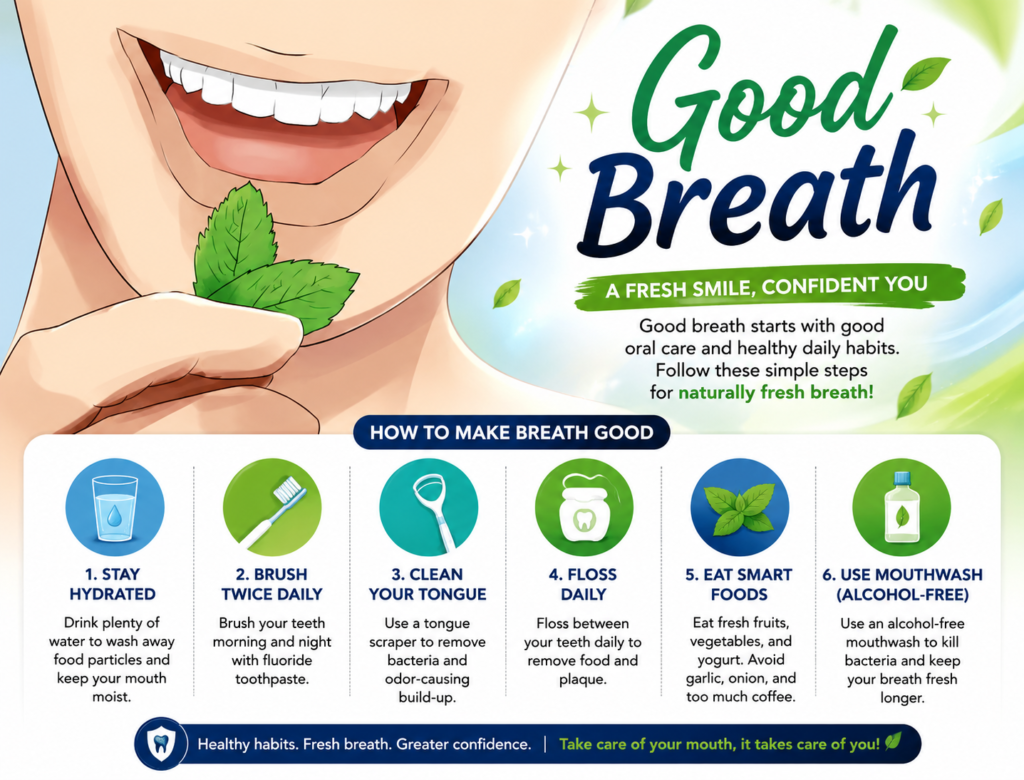
The first step is understanding that bad breath does not automatically mean poor hygiene.
Sometimes your body is simply not producing enough saliva.
By supporting your mouth’s natural moisture levels, many people notice:
- Fresher breath
- Better comfort
- Improved sleep
- Less irritation
- Healthier gums
- Fewer cavities
How To Treat Bad Breath Caused By Dry Mouth
The good news is that bad breath caused by dry mouth can often be improved by restoring moisture and supporting your mouth’s natural defenses.
Instead of trying to cover odors with strong flavors or harsh products, focus on helping your mouth stay comfortable, hydrated, and balanced.
Small daily habits can make a huge difference.
You can explore resources about dry mouth, oral comfort, and moisture-supporting care at Denta-Med
Drink Water Throughout The Day
Water is essential for overall health, but it is important to understand that drinking water alone does not replace saliva.
Water provides temporary relief, while saliva contains proteins, enzymes, and natural lubricants that protect your mouth.
Still, staying hydrated helps your body produce saliva more effectively.
Try to:
- Carry a reusable water bottle.
- Sip water regularly instead of drinking large amounts all at once.
- Increase water intake during hot weather.
- Drink extra water when consuming caffeine.
Proper hydration creates a strong foundation for better oral comfort.
Avoid Products That Dry Out Your Mouth
Many people accidentally make their dry mouth worse without realizing it.
Common culprits include:
Alcohol-Based Mouthwashes
Alcohol creates a fresh feeling at first, but it also removes moisture from oral tissues.
For people already struggling with dry mouth, this often makes symptoms worse.
Toothpastes Containing SLS
Sodium Lauryl Sulfate (SLS) is a foaming ingredient found in many conventional toothpastes.
Some individuals find that SLS causes irritation and contributes to feelings of dryness.
Excessive Caffeine
Coffee, energy drinks, and certain teas may increase dryness in some people.
You do not necessarily need to eliminate caffeine completely, but balancing it with adequate water intake is important.
Smoking And Tobacco Products
Smoking affects saliva production and significantly increases the risk of chronic bad breath.
Reducing or quitting tobacco use can improve both oral health and overall wellbeing.
Clean Your Tongue Every Day
Your tongue can hold millions of bacteria.
When saliva levels are low, these bacteria multiply more quickly and create unpleasant odors.
Using a tongue scraper or gently brushing your tongue once or twice daily helps remove:
- Food debris
- Dead cells
- Odor-causing bacteria
- Surface buildup
Many people notice an immediate improvement in breath freshness after adding tongue cleaning to their routine.
Choose Foods That Support Saliva Production
Some foods naturally encourage saliva flow.
Helpful options include:
Crunchy Fruits And Vegetables
Apples, celery, carrots, and cucumbers stimulate chewing and increase saliva production.
Sugar-Free Gum
Chewing sugar-free gum containing xylitol may encourage saliva flow without feeding harmful bacteria.
Moist Foods
Soups, yogurt, smoothies, and foods with higher water content are often easier to tolerate for people with dry mouth.
At the same time, try to reduce foods that may worsen symptoms:
- Extremely salty snacks
- Spicy foods
- Highly acidic beverages
- Sugary candies
- Excessive alcohol consumption
Finding the right balance helps your mouth stay comfortable throughout the day.
Create A Nighttime Dry Mouth Routine
Nighttime is often the most challenging period for people with dry mouth.
During sleep, saliva production naturally decreases. If you also breathe through your mouth or snore, dryness can become much worse.
A simple evening routine can help:
Brush With Gentle Oral Care Products
Choose products designed specifically for dry mouth rather than heavily foaming formulas.
Keep Water Nearby
Having water available can provide quick relief if you wake up feeling uncomfortable.
Use A Humidifier
Adding moisture to bedroom air may help reduce overnight dryness.
Address Mouth Breathing
If snoring or mouth breathing is persistent, discussing it with a healthcare professional may be worthwhile.
Better airflow often means better sleep and healthier oral tissues.
When Specialized Dry Mouth Products Can Help
Lifestyle changes are important, but some people need additional support.
This is especially true if dry mouth results from:
- Prescription medications
- Medical conditions
- Radiation therapy
- Chronic mouth breathing
- Aging-related factors
In these situations, moisture-supporting oral care products can make daily life much more comfortable.
The goal is not simply cleaning the teeth.
The goal is supporting the entire oral environment.
That means:
- Maintaining hydration
- Protecting gums
- Reducing bacterial buildup
- Improving comfort
- Helping keep breath fresh longer
A Gentle Daily Routine For Dry Mouth Relief
Many people find success with a simple routine focused on moisture rather than harsh cleansing.
Morning
Start your day with a gentle oral care routine designed for dry mouths.
Hydrating products help remove bacteria while supporting comfort instead of stripping away natural moisture.
Throughout The Day
Use moisture-supporting products whenever dryness begins to return.
This can be particularly helpful during:
- Long meetings
- Public speaking
- Air travel
- Hot weather
- Exercise
- Overnight shifts
Before Bed
Nighttime preparation is one of the most important steps.
Supporting oral moisture before sleeping may reduce:
- Morning breath
- Dry throat discomfort
- Sleep interruptions
- Gum irritation
Finding The Right Dry Mouth Solutions
At Denta-Med, our focus is helping people manage dry mouth with products specifically designed to support hydration and comfort.
Unlike many conventional oral care products, moisture-supporting solutions are designed to work with your mouth rather than against it.
That means avoiding unnecessary ingredients that may contribute to further dryness.
The goal is simple:
Help people enjoy fresher breath, healthier mouths, and greater everyday comfort.
What Real People Say About Dry Mouth
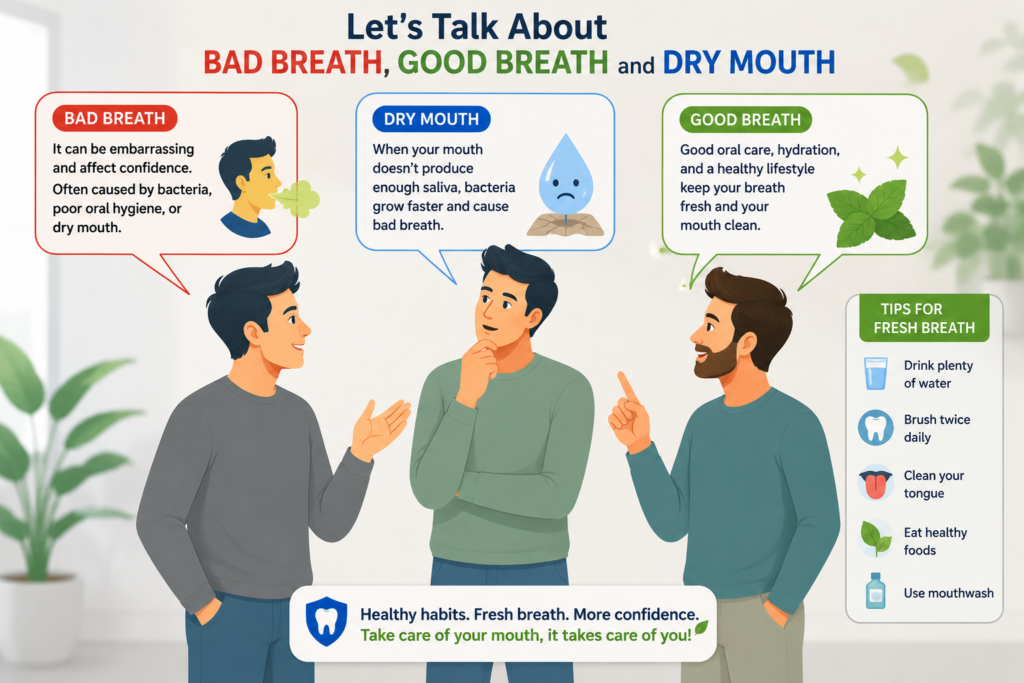
Many individuals experiencing dry mouth share similar frustrations.
They often describe:
- Feeling embarrassed during conversations.
- Constantly reaching for water.
- Waking up multiple times each night.
- Avoiding social situations.
- Worrying that others notice their breath.
These experiences are extremely common.
Many people on Reddit communities dedicated to dry mouth support mention that improving moisture levels makes a noticeable difference in both daily comfort and self confidence. While personal experiences vary, a common theme is that addressing dryness often helps reduce bad breath and improves overall quality of life.
Of course, personal experiences vary, and persistent symptoms should always be discussed with a healthcare professional.
Remember: Bad Breath Is Often A Symptom, Not The Problem
One of the most important things to understand is this:
Bad breath is often a signal rather than the root issue.
If your mouth lacks adequate saliva, your body loses one of its strongest natural defenses.
Treating the dryness itself often leads to:
- Fresher breath
- Better oral health
- Reduced irritation
- Improved sleep quality
- Greater confidence in daily interactions
Instead of fighting odors over and over again, supporting moisture helps address the source of the problem.
Frequently Asked Questions About Dry Mouth And Bad Breath
Can dry mouth cause bad breath even if I brush my teeth regularly?
Yes.
You can have excellent oral hygiene and still experience bad breath if your mouth is too dry.
Brushing removes plaque and food particles, but saliva plays an important role in continuously cleaning your mouth throughout the day. Without enough saliva, odor-causing bacteria can multiply quickly, leading to persistent bad breath.
Why is my breath worse in the morning?
Saliva production naturally slows down while you sleep.
If you also snore or breathe through your mouth, moisture evaporates even faster. This creates the perfect environment for bacteria to grow overnight, which is why many people wake up with strong morning breath.
Creating a bedtime routine that supports oral hydration can make a significant difference.
Can drinking more water fix dry mouth permanently?
Drinking water helps, but it usually does not solve the problem on its own.
Water provides temporary moisture, while saliva contains natural enzymes and lubricants that protect your teeth, gums, and tongue.
People with chronic dry mouth often benefit from using products specifically designed to support long-lasting oral hydration.
What foods should I avoid if I have dry mouth?
Certain foods and beverages can make symptoms worse, including:
- Alcohol
- Excess caffeine
- Salty snacks
- Highly acidic foods
- Spicy meals
- Sugary candies
Choosing water-rich foods such as fruits, vegetables, soups, and yogurt may help keep your mouth more comfortable.
Can medications cause dry mouth and bad breath?
Absolutely.
Many common medications list dry mouth as a side effect, including:
- Allergy medicines
- Antidepressants
- Blood pressure medications
- Sleep aids
- Decongestants
If you suspect medication is contributing to your symptoms, speak with your healthcare provider before making any changes.
Is dry mouth dangerous?
Dry mouth is not always dangerous, but leaving it untreated can increase the risk of:
- Tooth decay
- Gum disease
- Mouth infections
- Difficulty chewing and swallowing
- Persistent bad breath
Taking steps to manage dry mouth early helps protect your long-term oral health.
Is dry mouth a normal part of getting older?
No.
Although dry mouth becomes more common with age, aging itself is not the direct cause.
The increase is usually related to medications, medical conditions, or treatments that affect saliva production.
No matter your age, you deserve to feel comfortable and confident.
When Should You See A Dentist Or Doctor?
Occasional dryness is common.
However, you should consider professional advice if you experience:
- Persistent bad breath despite good oral hygiene.
- Difficulty swallowing.
- Frequent cavities.
- Cracked lips or mouth sores.
- Severe nighttime dryness.
- Problems speaking because your mouth feels sticky.
Healthcare professionals can help identify underlying causes and recommend appropriate treatment options.
Simple Daily Habits That Support Fresh Breath
If you remember only a few things from this article, make them these:
Stay Hydrated
Drink water consistently throughout the day rather than waiting until you feel thirsty.
Avoid Harsh Oral Care Products
Choose alcohol-free and moisture-friendly options whenever possible.
Clean Your Tongue Daily
Removing bacteria from the tongue can significantly improve breath freshness.
Support Saliva Production
Sugar-free gum, crunchy vegetables, and proper hydration may help stimulate natural saliva flow.
Prioritize Nighttime Care
Many dry mouth symptoms become worse during sleep, making evening routines especially important.
A Better Approach To Managing Dry Mouth
For many people, the traditional approach to bad breath focuses on stronger flavors, harsher mouthwashes, and temporary fixes.
But lasting improvement often comes from a completely different mindset.
Instead of asking:
“How do I hide bad breath?”
Ask:
“Why is my mouth becoming dry in the first place?”
When moisture returns, comfort improves.
When comfort improves, bacterial balance improves.
And when bacterial balance improves, fresher breath often follows naturally.
That is why moisture-focused oral care can be so valuable for people living with dry mouth.
Explore Moisture-Focused Oral Care Solutions
If dry mouth affects your daily life, having products specifically designed for hydration can make a meaningful difference.
Our collection of dry mouth solutions is created to support oral comfort while helping people maintain fresher breath and healthier smiles.
Browse our full range here:
Denta-Med Shop
You can also learn more about our mission and approach to oral wellness by visiting:
Denta-Med Home
Remember, fresh breath starts with a healthy, hydrated mouth.
Final Thoughts: Can Dry Mouth Cause Bad Breath?
Yes, dry mouth can absolutely cause bad breath.
Saliva is one of your body’s most important natural defenses. It helps clean your mouth, control bacteria, protect your teeth, and maintain fresh breath throughout the day.
When saliva levels drop, odor-causing bacteria gain the opportunity to thrive.
The good news is that understanding the cause puts you in control of the solution.
By staying hydrated, avoiding harsh products, supporting saliva production, and following a gentle oral care routine, many people experience significant improvements in both comfort and confidence.
You do not have to live with persistent bad breath or the discomfort of a dry mouth.
Small changes, combined with the right support, can help you enjoy a healthier, fresher, and more comfortable smile every day.