

Why Is My Mouth So Dry Even After Drinking Water?
One of the most common things patients tell me is:
“I keep drinking water all day, but my mouth still feels dry.”
If this sounds familiar, the important thing to understand is that dry mouth is not always caused by dehydration. In many cases, the real problem is reduced saliva production or poor saliva quality.
Think of it this way.
Water is like briefly rinsing a dry surface. Saliva, however, acts more like a protective moisturising layer that stays attached to the mouth tissues. If your body is not producing enough healthy saliva, drinking water may only provide relief for a few minutes before the dryness returns again.
This is why many people with chronic dry mouth wake up several times during the night needing water but still feel uncomfortable.
Products such as Denta-Med Dry Mouth Gel are specifically designed to help replace saliva’s protective role while providing longer lasting oral moisture and comfort.
What Is Dry Mouth?
Dry mouth, also called xerostomia, happens when the mouth does not produce enough healthy saliva. Saliva helps keep the mouth moist, protects the teeth and gums, and supports comfortable speaking and swallowing. When saliva becomes reduced or poor quality, the mouth may feel dry, sticky, irritated, or uncomfortable even after drinking water.
Understanding Xerostomia
Dry mouth, medically known as xerostomia, happens when the mouth does not produce enough saliva to properly lubricate and protect oral tissues.
Most people think saliva only helps with eating, but it actually performs several critical functions every minute of the day.
Healthy saliva helps:
- Keep the mouth comfortable
- Protect teeth from decay
- Support swallowing
- Reduce bacteria buildup
- Lubricate the tongue and throat
- Protect delicate gum tissue
Without enough saliva, even simple daily activities can become uncomfortable.
Patients often describe symptoms such as:
- A sticky or cotton like feeling
- Difficulty swallowing dry foods
- Burning tongue sensation
- Thick or stringy saliva
- Cracked lips
- Bad breath
- Dry throat during sleep
In severe cases, some patients even avoid speaking for long periods because their mouth dries out so quickly.
Why Your Mouth Still Feels Dry After Drinking Water
Water Does Not Replace Saliva
This is one of the biggest misconceptions about dry mouth.
Water hydrates the body, but saliva performs a completely different job inside the mouth.
Saliva coats the:
- Tongue
- Teeth
- Gums
- Inner cheeks
- Throat
This coating protects and lubricates the tissues continuously.
Water, on the other hand, washes through the mouth quickly and evaporates fast. That is why some people feel temporary relief while drinking water, only for the dryness to return moments later.
A simple example I often give patients is this:
Imagine watering dry soil without adding mulch or protection. The moisture disappears quickly. Saliva acts like that protective layer helping moisture stay where it is needed.
Your Saliva May Be Reduced or Poor Quality
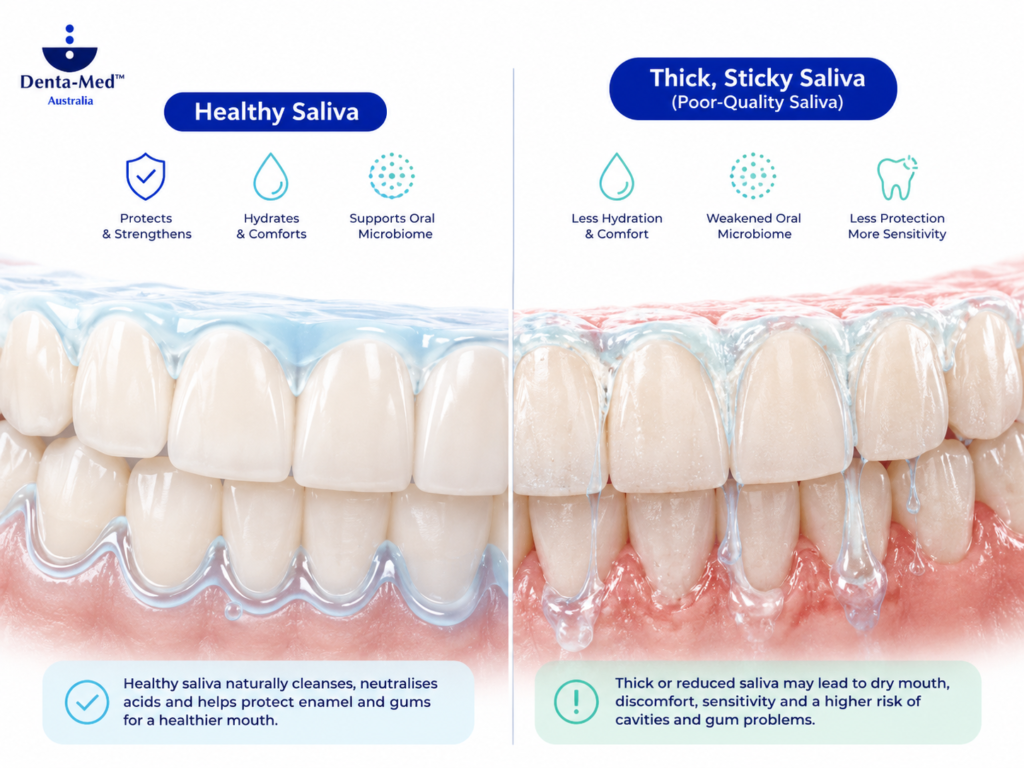
Not every dry mouth patient has completely “dry” glands. Sometimes the saliva becomes thick, sticky, or ineffective.
This commonly happens in people with:
- Medication side effects
- Sjögren’s syndrome
- Radiation therapy
- Silent reflux
- Anxiety
- Mouth breathing during sleep
In some cancer therapy patients, saliva glands may even become permanently damaged, making long term oral moisture support essential.
According to Denta-Med Australia, their gel is specifically designed to help replicate saliva’s protective role when natural saliva is compromised or absent.
Common Causes of Persistent Dry Mouth
Persistent dry mouth can happen for many different reasons. Some of the most common causes include medications, mouth breathing during sleep, acid reflux, stress, anxiety, autoimmune conditions like Sjögren’s syndrome, and cancer treatments such as radiation therapy. In many cases, these conditions reduce saliva production or affect saliva quality, making the mouth feel constantly dry, sticky, or uncomfortable.
Medications
Medication related dry mouth is extremely common in clinical practice.
Many prescription medications reduce saliva flow as a side effect, including:
- Antidepressants
- ADHD medications
- Antihistamines
- Blood pressure medications
- Anxiety medication
Patients often notice the dryness becoming worse overnight because saliva production naturally decreases during sleep.
Mouth Breathing During Sleep
If you sleep with your mouth open, your oral tissues can dry very quickly overnight.
This is common in people who:
- Snore
- Have blocked sinuses
- Use CPAP machines
- Experience nasal congestion
Many patients wake up with:
- Dry lips
- Sticky saliva
- Sore throat
- Burning mouth sensation
Silent Reflux and Acid Reflux
Silent reflux can be surprisingly irritating to the mouth and throat.
Some patients describe it as:
“My throat feels dry and irritated all the time.”
Others notice:
- Burning tongue
- Bitter taste
- Constant throat clearing
- Difficulty swallowing
- Dry feeling deep in the throat
The irritation caused by reflux can worsen oral discomfort and dryness significantly.
Autoimmune Conditions and Cancer Therapy
Conditions such as Sjögren’s syndrome directly affect saliva glands and can severely reduce saliva production.
Cancer treatments such as radiation therapy may also damage oral tissues and saliva glands permanently.
When this happens, patients often need long term oral lubrication and moisture support throughout the day and night.
Signs Your Dry Mouth May Be More Serious
Occasional dryness is normal. Persistent daily symptoms are not something you should ignore.
You should pay closer attention if you experience:
- Difficulty swallowing
- Thick or ropey saliva
- Burning mouth sensation
- Mouth ulcers
- Cracked lips
- Persistent bad breath
- Frequent dental decay
- Gum irritation
Saliva is one of the mouth’s natural protective systems. When it becomes reduced, the teeth and soft tissues become much more vulnerable.
Why Most Dry Mouth Products Only Work Briefly
Many Products Simply Wet the Mouth
One of the frustrations patients commonly mention is:
“Everything works for five minutes and then stops.”
That happens because many products only add temporary moisture without staying attached to oral tissues.
Some products may even worsen dryness if they contain:
- Alcohol
- Harsh detergents
- Sodium Lauryl Sulphate (SLS)
These ingredients can irritate already sensitive mouths.
Why Long Lasting Moisture Is Important
For chronic dry mouth patients, lasting moisture matters far more than quick temporary relief.
Especially during sleep.
According to Denta-Med Dry Mouth Gel Information, Denta-Med Gel is muco adhesive, meaning it adheres to oral tissues while forming a protective moisture barrier inside the mouth.
The gel is designed to coat:
- Teeth
- Tongue
- Gums
- Cheeks
- Soft tissue
This may help provide moisture and comfort for up to 8 hours overnight.
How Denta-Med Dry Mouth Gel Helps
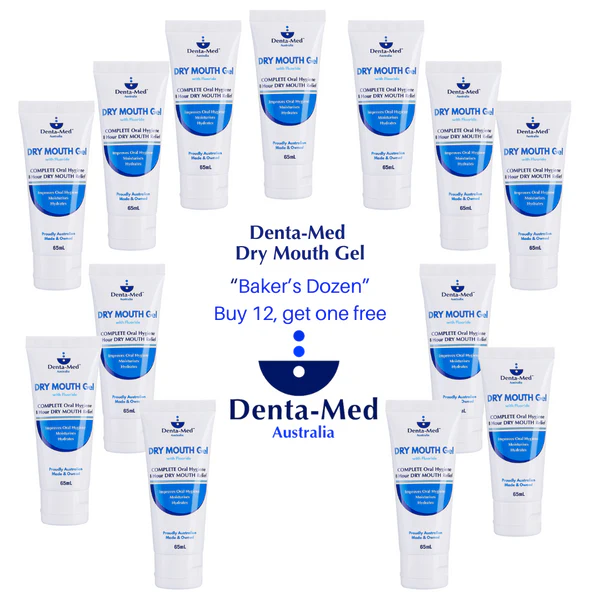
Denta-Med Dry Mouth Gel is designed to help moisturise, hydrate, clean, and protect dry mouths by supporting the important protective role of saliva. Unlike products that only provide brief moisture, the gel forms a long lasting protective layer inside the mouth to help relieve dryness, soothe sensitive tissues, and improve comfort during speaking, eating, and sleeping.
Designed to Replicate Saliva’s Protective Function
One thing I appreciate clinically about Denta-Med Dry Mouth Gel is that it is not simply a mint flavoured gel designed to temporarily wet the mouth.
It is formulated specifically to:
- Moisturise
- Lubricate
- Clean
- Protect oral tissues
The formulation contains:
- Sodium Fluoride 1,000ppm
- Zinc Chloride
- Cetylpyridinium Chloride
- Proprietary vegan chitin polysaccharide
The gel is also water soluble, which means it does not build up heavily in the throat area.
Gentle for Sensitive and Medically Compromised Mouths
Many chronic dry mouth patients also have extremely sensitive oral tissue.
Denta-Med products do not contain:
- Alcohol
- Sodium Lauryl Sulphate
- Xylitol
- Chlorhexidine
- Triclosan
This is important because irritated mouths often react poorly to harsh ingredients found in standard oral care products.
Can Replace Regular Toothpaste
Interestingly, Denta-Med Gel is designed as a complete oral care product rather than only a lubricant.
According to the manufacturer, it can be used as an everyday toothpaste replacement for people with dry or sensitive mouths.
That is particularly useful for patients who find regular toothpaste stings, burns, or worsens irritation.
Helpful Tips for Managing Dry Mouth
Managing dry mouth often requires a combination of good hydration, gentle oral care, and lifestyle adjustments. Simple habits such as sipping water regularly, avoiding alcohol based mouthwash, reducing caffeine, using a humidifier at night, and breathing through the nose can help reduce dryness and irritation. Using supportive products designed specifically for dry mouth may also help improve long lasting comfort and protect oral health.
Small Changes Can Make a Big Difference
Alongside oral moisturising products, I often recommend simple habits such as:
- Sipping water regularly instead of large amounts at once
- Avoiding alcohol based mouthwash
- Reducing caffeine intake
- Using a humidifier overnight
- Breathing through the nose where possible
- Avoiding smoking
Patients who combine these habits with longer lasting oral moisturising products often experience better symptom control.
Protecting Your Teeth Is Extremely Important
Dry mouth patients are at much higher risk of:
- Cavities
- Gum disease
- Mouth infections
This is because saliva normally protects the teeth from bacteria and acid buildup.
Using fluoride containing oral care products may help support enamel protection.
According to the manufacturer, Denta-Med Gel contains Sodium Fluoride 1,000ppm and is suitable for children aged 3 years and older.
When You Should See a Healthcare Professional
You should seek professional advice if:
- Dry mouth lasts for several weeks
- Swallowing becomes difficult
- Mouth pain develops
- You experience repeated dental problems
- Symptoms become severe suddenly
Persistent dry mouth can sometimes signal an underlying medical condition that requires investigation.
Why Choosing the Right Dry Mouth Product Matters
Not all dry mouth products work the same way.
This is something many patients discover after spending months trying different mouthwashes, sprays, chewing gums, or lozenges that only provide relief for a few minutes.
When evaluating a dry mouth product clinically, I usually look at several important factors:
- Does it simply wet the mouth temporarily, or does it actually support saliva’s protective role?
- Will it stay in the mouth long enough to provide meaningful relief?
- Is it gentle enough for sensitive or medically compromised mouths?
- Does it only moisturise, or does it also help protect oral health?
- Can patients safely use it long term every day?
These questions matter because chronic dry mouth is not just uncomfortable. Over time, it can affect:
- Sleep quality
- Swallowing
- Speaking
- Gum health
- Tooth protection
- Overall quality of life
That is why many healthcare professionals pay attention to how a product is formulated, especially for patients dealing with severe or ongoing oral dryness.
To better understand why many patients prefer Denta-Med Dry Mouth Gel, let us look at seven important clinical reasons in more detail.
The 7 Reasons Many Dry Mouth Patients Prefer Denta-Med Gel
1. It Helps Replicate the Protective Function of Saliva
Why saliva replacement matters for comfort, swallowing, and oral protection.
2. The Gel Stays Attached to the Mouth Longer
How muco adhesive technology helps provide longer lasting moisture instead of temporary relief.
3. It Is Designed for Sensitive and Medically Compromised Mouths
Why avoiding harsh ingredients is important for irritated oral tissues.
4. It Cleans and Protects While Moisturising
How the formula supports both hydration and oral hygiene together.
5. It Can Replace Regular Toothpaste
Why many patients with severe dryness find standard toothpaste uncomfortable.
6. Water Soluble Technology Improves Comfort
Why water soluble gels may feel safer and more comfortable for ongoing use.
7. It Is Designed for Long Term Daily Use
Why chronic dry mouth patients often need consistent everyday moisture support.
Final Thoughts For why is my mouth so dry even after drinking water
Chronic dry mouth can significantly affect comfort, sleep, swallowing, speaking, and oral health.
If drinking water is not helping, the issue may not simply be dehydration. In many cases, the mouth needs help replacing the protective function that healthy saliva normally provides.
Products such as Denta-Med Dry Mouth Gel are designed specifically for this purpose, helping moisturise, protect, and support sensitive dry mouths with longer lasting hydration and oral care support.